Summary
- Best ERP software for trading business in Nepal
- What is ERP Software for a Trading Business?
- Best ERP software for trading business in Nepal
- The Current Landscape of Trading Businesses in Nepal
- Key Features to Look for in Trading ERP Software
- Choosing the Best ERP software for trading business in Nepal
- Considering Cloud-Based versus On-Premise Deployment
- Overcoming Implementation Challenges in the Nepalese Market
- The Role of Automation in Modernizing Trading Processes
- Enhancing Customer Relationship Management
- Future Trends in ERP Technology for Trading Companies
- Challenges Faced by Trading Businesses in Nepal
- Features of the Best ERP Software for Trading Business in Nepal
- Benefits of ERP Software for Trading Businesses
- Why Udyot ERP is the Best ERP Software for Trading Business in Nepal
- Industries That Benefit from Udyot ERP
- How ERP Helps Grow a Trading Business
- Conclusion
- FAQ
Best ERP software for trading business in Nepal
In order to run a trading operation in Nepal, you need more than just purchasing and selling goods; the business requires proper inventory management, good buying process, seamless sales processing, accurate record keeping, and compliance with the tax laws of Nepal. As trading business grows in scope, managing these business processes manually or with disconnected applications becomes even more challenging.
An Enterprise Resource Planning (ERP) platform enters here as the essential part of the business. The best ERP applications allow trading organizations to automate their daily activities and enhance productivity, eliminate errors, and have access to real-time data to make better decisions.
If you are looking for an Best ERP software for trading business in Nepal, the following guide covers the key features and the advantages of Udyot ERP, which is a reliable software for wholesalers, distributors, retailers, and foreign traders.
What is ERP Software for a Trading Business?
ERP, or Enterprise Resource Planning, is an interconnected enterprise management application that unites different business processes into one place. ERP can be seen as a solution that loses the necessity to work with various tools for various areas of the business (i.e. ledger, stock management, sales, purchase, etc.).
For trading businesses, ERP software typically manages:
- Inventory and warehouse operations
- Sales and billing
- Purchasing and supplier management
- Accounting and finance
- VAT and tax reporting
- Customer relationship management (CRM)
- Cash and bank management
- Business reporting and analytics
This integration improves efficiency, reduces duplicate data entry, and provides better visibility across the business.
Best ERP software for trading business in Nepal
The local market is evolving rapidly, and companies are shifting away from manual spreadsheets to stay competitive. Modern digital infrastructure is no longer a luxury; it is a vital necessity for any growing enterprise.
Selecting the right digital tools can significantly streamline your daily operations. By automating complex tasks, you can improve overall profitability and focus on scaling your reach. Technology acts as a bridge, helping owners overcome unique operational hurdles with ease.
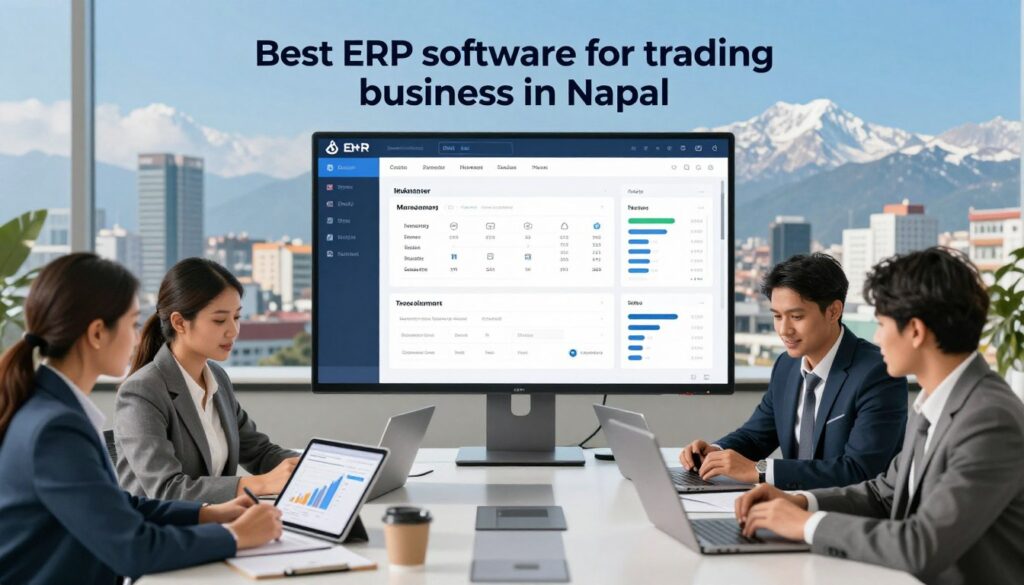
We invite you to explore how integrated systems transform traditional workflows. Discovering the best ERP software for trading businesses in Nepal will empower your team to make data-driven decisions every single day.
Key Takeaways
- Digital transformation is essential for modernizing local trade operations.
- Moving away from manual spreadsheets reduces human error and saves time.
- Integrated systems provide real-time insights to boost overall profitability.
- Automation helps business owners overcome common logistical and financial hurdles.
- Choosing the right platform is a strategic step toward long-term growth.
The Current Landscape of Trading Businesses in Nepal
Digital transformation in Nepal is rapidly changing how local trading companies manage their daily operations. For many small and medium-sized enterprises, moving away from manual record-keeping is no longer just an option; it is a critical requirement for survival. As the market becomes more complex, business owners are realizing that technology provides the edge needed to thrive.
The local economic environment is shifting toward a more data-driven approach. Traders are facing increased pressure to maintain accurate inventory levels and provide faster service to their clients. To keep up with these demands, many firms are adopting integrated software solutions to streamline their workflows.
Several key trends are currently shaping the business ecosystem in the region:
- Increased demand for real-time data to make informed purchasing decisions.
- A growing need for automated tax compliance to meet local regulatory standards.
- The rise of e-commerce integration as a standard practice for modern retailers.
- Greater focus on customer relationship management to build long-term loyalty.
Ultimately, the ongoing Digital transformation in Nepal serves as a bridge between traditional trading methods and global standards. By embracing these modern tools, local businesses can reduce human error and improve their overall efficiency. This transition is essential for any company looking to scale its operations in an increasingly competitive landscape.
Key Features to Look for in Trading ERP Software
Modern trading businesses require robust digital tools to stay competitive in today’s fast-paced market. Implementing Trading business automation is no longer a luxury but a necessity for companies looking to scale effectively. By choosing the right platform, you can bridge the gap between complex operational needs and simplified daily management.
Inventory Management and Real-time Tracking
Effective Inventory management software serves as the backbone of any successful trading enterprise. It allows you to monitor stock levels across multiple warehouses with precision, ensuring you never face unexpected shortages. Real-time tracking provides the visibility needed to make informed purchasing decisions instantly.
Furthermore, high-quality Supply chain management software helps you maintain optimal stock levels. This prevents the common pitfalls of overstocking or losing sales due to empty shelves. You gain a clear picture of your business health by keeping your data accurate and accessible at all times.
Financial Accounting and Tax Compliance
Managing your books requires reliable Financial accounting tools that integrate seamlessly with your sales data. These systems automate complex calculations, reducing the risk of human error in your financial reporting. Accuracy is paramount when dealing with your company’s bottom line.
In addition, utilizing Local tax compliance software ensures that your business adheres to regional regulations without manual intervention. This feature simplifies the filing process and keeps your operations audit-ready throughout the year. It provides peace of mind, allowing you to focus on growth rather than paperwork.
Sales Order and Purchase Order Automation
Efficiency in your daily workflow often comes down to how well you handle incoming and outgoing requests. Automated sales order processing eliminates the need for manual data entry, which significantly speeds up your fulfillment cycle. This transition ensures that orders move from the customer to the warehouse without unnecessary delays.
By automating purchase orders, you also create a consistent link between your procurement team and your suppliers. This streamlined communication reduces misunderstandings and ensures that your inventory replenishment happens exactly when needed. Investing in these automated features is a smart move for any business aiming for long-term success.
Choosing the Best ERP software for trading business in Nepal
Selecting the best ERP software for trading business in Nepal requires a strategic approach to your unique operational needs. It is not just about buying a tool; it is about investing in a system that grows alongside your company. Making the right choice ensures that your daily workflows remain smooth and profitable.
Assessing Your Business Size and Budget
Before committing to a platform, you must clearly define your current scale and future goals. Small trading firms often benefit from modular systems that allow them to pay only for the features they actually use. Avoid the trap of overspending on complex enterprise features that your team might never touch.
Take the time to audit your existing processes to identify where you lose the most time. A well-chosen system should provide a clear return on investment by reducing manual labor and human error. Always set a realistic budget that includes not just the license fees, but also the costs of training and maintenance.
Evaluating Local Support and Implementation Partners
Technical issues are inevitable, so having access to reliable local support is a critical success factor. You need a partner who understands the specific nuances of the Nepalese market, including local tax laws and business customs. A vendor with a strong local presence can provide faster troubleshooting and personalized guidance.
Before signing a contract, ask for references from other local businesses in the trading sector. A good implementation partner will do more than just install the software; they will help your staff adapt to the new digital environment. Building a strong relationship with your provider ensures that your system stays updated and effective over time.
Considering Cloud-Based versus On-Premise Deployment
Deciding between local servers and Cloud ERP solutions depends on your company’s technical infrastructure and security preferences. Cloud-based systems offer the advantage of remote access, which is perfect for teams that need to check stock levels from different locations. These solutions often require lower upfront capital, making them an attractive option for growing businesses.
On the other hand, on-premise deployments give you full control over your data and do not rely on constant internet connectivity. This can be a safer bet if your office location faces frequent network instability. Carefully weigh these options to determine which infrastructure best supports your long-term operational stability.
Overcoming Implementation Challenges in the Nepalese Market
Successfully deploying an ERP system in the Nepalese market demands a strategic approach to change management. While the benefits of automation are clear, businesses often encounter specific ERP implementation challenges that can slow down the transition. Addressing these hurdles early ensures a smoother path toward digital transformation.

Data Migration and Staff Training
One of the most technical hurdles involves ERP data migration. Moving legacy records into a new digital environment requires precision to prevent data loss or corruption. Companies should prioritize cleaning their existing databases before the transfer begins.
Beyond the technical side, human factors play a vital role. Comprehensive staff training is essential for long-term success. Employees must feel comfortable using the new interface to ensure that daily operations continue without interruption.
Adapting to Local Tax Regulations and VAT Filing
Navigating the unique regulatory landscape of Nepal requires specialized tools. Businesses need Local tax compliance software that is specifically designed to handle the intricacies of VAT filing and local reporting requirements.
Using generic international software can lead to errors if it does not support local tax laws. It is highly recommended to verify that your chosen platform offers built-in modules for regional tax compliance. This proactive step saves significant time during audit periods.
Ensuring Reliable Internet Connectivity for Cloud ERP
The shift toward Cloud ERP solutions offers great flexibility and remote access for trading teams. However, these systems rely heavily on stable internet connectivity to function at peak performance. Intermittent network issues can disrupt real-time inventory updates and sales processing.
To mitigate these risks, businesses should invest in redundant internet connections or dedicated leased lines. Maintaining a consistent connection ensures that your team can access critical data whenever they need it, regardless of external network fluctuations.
The Role of Automation in Modernizing Trading Processes
Automation serves as the backbone for any trading business looking to scale operations efficiently. By replacing repetitive manual tasks with smart software, companies can achieve sustainable growth and maintain a competitive edge in a crowded market. Implementing Trading business automation is no longer a luxury; it is a necessity for modern success.
Reducing Manual Errors in Stock Management
Manual data entry is often the primary cause of inventory discrepancies and stockouts. When staff members manually update spreadsheets, the risk of human error increases significantly. Automated systems ensure that every stock movement is recorded in real-time, providing a single source of truth for your warehouse.
- Automatic synchronization across multiple sales channels.
- Instant alerts for low-stock levels to prevent missed sales.
- Elimination of duplicate entries and calculation mistakes.
Enhancing Customer Relationship Management
Effective Business process optimization extends beyond the warehouse and into your customer interactions. Modern CRM tools allow trading firms to track purchase history, preferences, and communication logs in one place. This level of insight helps teams provide personalized service that fosters long-term loyalty.
By automating follow-ups and support tickets, your team can focus on building meaningful connections rather than managing administrative clutter. Happy customers are the result of consistent, reliable service delivered through streamlined internal workflows.
Improving Decision-Making with Data Analytics
Managers need accurate information to steer their companies in the right direction. Automated sales order processing captures every transaction detail, which feeds directly into powerful analytics dashboards. These tools transform raw data into actionable insights that highlight trends and identify potential bottlenecks.
With clear visibility into sales performance and operational costs, leadership can make faster, more informed decisions. Relying on data-driven strategies ensures that your business remains agile and ready to adapt to changing market conditions.
Future Trends in ERP Technology for Trading Companies
As we look toward the future, several key trends are set to transform the way trading firms manage their daily operations. Digital transformation in Nepal is currently gaining momentum, pushing businesses to adopt smarter tools to remain competitive. By focusing on business process optimization, companies can streamline their workflows and prepare for the challenges of a digital-first marketplace.
Integration with E-commerce Platforms
Modern trading businesses are increasingly linking their ERP systems directly with online storefronts. This seamless connection ensures that inventory levels, pricing, and customer data remain synchronized across all channels. When a customer places an order online, the ERP automatically updates stock records, reducing the risk of overselling.
Mobile Accessibility for Field Sales Teams
Empowering staff with mobile ERP access is essential for teams that operate outside the office. Field sales representatives can now check real-time product availability, process orders, and view customer history directly from their tablets or smartphones. This level of connectivity ensures that every interaction with a client is backed by accurate, up-to-the-minute data.
Efficiency is the primary benefit of this mobility, as it eliminates the need for manual data entry after returning to the office. By providing instant access to critical business information, companies can significantly boost their overall productivity and customer satisfaction levels.
Challenges Faced by Trading Businesses in Nepal
Many trading businesses experience operational challenges such as:
- Inaccurate stock records
- Overstocking or stock shortages
- Manual accounting errors
- Delayed billing and invoicing
- Difficulty tracking receivables and payables
- Complex VAT reporting
- Poor supplier coordination
- Lack of real-time business insights
An ERP system addresses these challenges by automating processes and providing accurate, real-time information.
Features of the Best ERP Software for Trading Business in Nepal
1. Complete Inventory Management
Inventory is the foundation of any trading business. A robust ERP should provide:
- Real-time stock tracking
- Multiple warehouse management
- Batch and serial number tracking
- Stock transfer management
- Minimum stock alerts
- Inventory valuation
- Physical stock verification
This ensures businesses always know what products are available and where they are stored.
2. Smart Purchase Management
Efficient procurement helps reduce costs and maintain stock levels.
Key features include:
- Purchase requisitions
- Supplier quotations
- Purchase orders
- Goods receipt notes (GRN)
- Purchase returns
- Supplier payment tracking
- Vendor performance analysis
3. Sales and Billing Management
The ERP should simplify the complete sales process by offering:
- Quotations
- Sales orders
- VAT and PAN billing
- Delivery notes
- Sales returns
- Discount management
- Multiple payment methods
Fast and accurate billing improves customer satisfaction and reduces waiting time.
4. Integrated Accounting
Accounting should be fully integrated with business operations.
Important accounting features include:
- General Ledger
- Trial Balance
- Balance Sheet
- Profit & Loss Statement
- Cash Flow Statement
- Journal Vouchers
- Bank Reconciliation
- Accounts Receivable
- Accounts Payable
- VAT Reports
Automatic accounting entries eliminate manual bookkeeping errors.
5. Customer Relationship Management (CRM)
A built-in CRM helps businesses:
- Maintain customer records
- Track purchase history
- Monitor outstanding balances
- Manage follow-ups
- Improve customer service
6. Financial and Business Reports
Decision-making becomes easier with comprehensive reports such as:
- Daily sales reports
- Purchase reports
- Stock reports
- Profitability analysis
- Customer outstanding reports
- Supplier outstanding reports
- Cash flow reports
- VAT reports
- Inventory aging reports
- Business performance dashboards
7. Multi-Branch and Multi-Warehouse Support
Growing trading businesses often operate from multiple locations.
A modern ERP should support:
- Multiple branches
- Multiple warehouses
- Centralized inventory
- Inter-branch transfers
- Consolidated financial reporting
Benefits of ERP Software for Trading Businesses
Implementing ERP software provides several advantages:
- Increased operational efficiency
- Reduced manual work
- Accurate inventory management
- Faster billing and invoicing
- Better financial control
- Improved supplier management
- Real-time reporting
- Better customer service
- Compliance with Nepal’s VAT regulations
- Improved profitability
Why Udyot ERP is the Best ERP Software for Trading Business in Nepal
Udyot ERP is a comprehensive, IRD-verified ERP solution designed specifically for Nepalese businesses. It combines accounting, inventory, sales, purchasing, payroll, HR, CRM, and business reporting into one powerful platform.
Key Features of Udyot ERP
- IRD-verified VAT and PAN billing
- Complete inventory management
- Multi-warehouse support
- Purchase and sales automation
- Integrated accounting
- Accounts receivable and payable management
- Customer and supplier management
- Bank and cash management
- Financial reporting
- VAT and tax reporting
- User role and permission management
- Dashboard with real-time analytics
- Multi-user and multi-branch capabilities
Industries That Benefit from Udyot ERP
Udyot ERP is suitable for:
- Wholesale businesses
- Retail stores
- Distributors
- Import and export companies
- FMCG distributors
- Hardware suppliers
- Electrical and electronics traders
- Pharmaceutical distributors
- Construction material suppliers
- Automobile parts dealers
How ERP Helps Grow a Trading Business
With ERP software, business owners can:
- Make faster business decisions
- Monitor stock in real time
- Reduce inventory losses
- Improve customer satisfaction
- Increase employee productivity
- Control operational costs
- Expand to multiple branches with confidence
ERP transforms business operations from manual processes into efficient digital workflows.
Whether you operate a small trading company or a large distribution network, Udyot ERP provides the tools needed to streamline operations and improve business performance.
Conclusion
The competition in the trading sector in Nepal is on the rise, which has increased the importance of efficiency and good business management practices. A reliable ERP solution can help with automating processes, managing inventory, simplifying accounting, and complying with tax laws in Nepal.
Among the solutions available in the market, Udyot stands out as one of the promising packages. The software offers a complete set of modules which are inter-related. It even provides real-time reports, and its online bills are approved by the IRD. By using a modern ERP package, customers will be able to enhance productivity and minimize costs.
Frequently Asked Questions (FAQs)
Udyot ERP is an excellent choice for trading businesses due to its integrated accounting, inventory, purchasing, sales, VAT compliance, and business reporting features.
Yes. Udyot ERP is designed to support wholesalers, distributors, retailers, and import-export businesses with advanced inventory and financial management capabilities.
Yes. It supports multiple warehouses, stock transfers, inventory tracking, and consolidated reporting.
Yes. Udyot ERP includes IRD-verified VAT and PAN billing features to help businesses comply with Nepal’s tax regulations.
Absolutely. Udyot ERP is scalable and suitable for startups, SMEs, and large enterprises, allowing businesses to grow without changing systems.