Summary
- POS software in Nepal
- The Evolution of Retail Technology in Nepal
- Key Benefits of Implementing POS Software in Nepal
- Essential Features to Look for in POS Software
- Integration with Local Payment Gateways like Fonepay and Khalti
- Navigating the Nepalese Market for POS Solutions
- POS Software in Nepal: Top Industry Applications
- Hardware Requirements for Modern POS Systems
- Overcoming Challenges in POS Adoption
- Ensuring Data Security and Backup Protocols
- Cost Analysis and Return on Investment
- Future Trends in Nepalese Retail Technology
- Why Businesses in Nepal Need a POS System
- Key Features of Modern POS software in Nepal
- Types of Businesses That Need POS Software
- Why Choose Udyot ERP POS?
- Industries Using Udyot ERP POS
- Conclusion
POS software in Nepal
Having an effective Point of Sale (POS) System in Nepal is not something that can be ignored as it is a must-have for every type of business, be it a retail shop, supermarket, pharmacy, restaurant, clothing store, or wholesale business.
The retail landscape across the Himalayas is undergoing a massive transformation. Local business owners are increasingly turning to digital tools to remain competitive in our connected global economy.
Adopting modern technology is no longer just an option; it is a vital step for operational success. By streamlining daily management, entrepreneurs can focus on what truly matters: serving their customers and growing their brands.
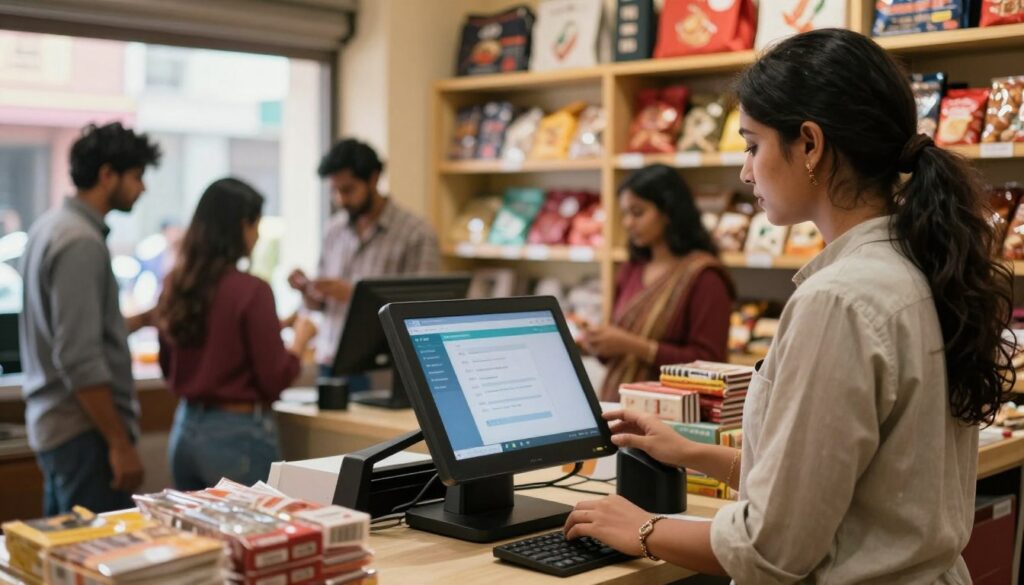
Selecting the right POS software in Nepal acts as the backbone for this transition. These systems provide the clarity and control needed to thrive in a busy marketplace. Whether you run a small cafe or a large retail store, the right digital solution will revolutionize your workflow and improve your bottom line.
Key Takeaways
- Digital transformation is essential for staying competitive in the modern market.
- Modern retail systems help business owners manage inventory and sales more effectively.
- Choosing the correct technology is a critical step for long-term operational success.
- Automated tools reduce manual errors and save valuable time for local entrepreneurs.
- Investing in reliable systems leads to better customer experiences and increased profitability.
The Evolution of Retail Technology in Nepal
A quiet revolution is taking place in the storefronts of Nepal, replacing dusty notebooks with sleek digital interfaces. This digital transformation is not just a trend; it is a fundamental change in how local businesses operate and grow. By embracing modern tools, shop owners are finding new ways to serve their customers efficiently.
Transitioning from Manual Ledgers to Digital Systems
For many years, the standard practice for tracking sales involved handwritten ledgers and physical calculators. While these methods served their purpose, they were prone to human error and made inventory tracking a difficult task. Transitioning to digital systems allows business owners to automate these repetitive chores, saving valuable time every single day.
Modern retail technology provides a clear view of stock levels and sales trends in real-time. This shift helps store managers make informed decisions rather than relying on guesswork. As businesses move away from paper, they gain the transparency needed to scale their operations effectively.
The Impact of Digital Payments on POS Adoption
The rise of digital payments has acted as a major catalyst for the adoption of point-of-sale systems across the country. With the widespread use of mobile wallets and QR code scanning, customers now expect a seamless checkout experience. Integrating these payment methods directly into a POS system ensures that every transaction is recorded accurately and instantly.
This digital transformation has made it easier for small shops to accept diverse payment types without manual reconciliation. By linking payment gateways to their software, retailers can reduce the risk of cash handling errors. The following table highlights the key differences between traditional and modern retail management.
| Feature | Manual Ledgers | Modern POS Systems |
| Data Entry | Handwritten | Automated |
| Inventory Tracking | Periodic/Manual | Real-time |
| Payment Processing | Cash Only | Integrated Digital Payments |
| Reporting | Time-consuming | Instant Analytics |
Key Benefits of Implementing POS Software in Nepal
Efficiency is the heartbeat of a successful retail store in today’s competitive market. By adopting POS software in Nepal, business owners can unlock new levels of productivity that were previously out of reach. Embracing business automation allows you to focus on what truly matters: growing your customer base and improving your services.
Streamlining Inventory Management Processes
Effective inventory management is the backbone of any thriving retail operation. Manual counting methods are often prone to delays and can lead to frustrating stockouts that drive customers away. Automated systems provide real-time updates, ensuring you always know exactly what is on your shelves.
When your stock levels are tracked digitally, you can set up alerts for low items. This proactive approach helps you reorder products before they run out. By reducing the time spent on manual audits, your staff can dedicate more energy to providing excellent customer service.
Enhancing Sales Accuracy and Reducing Human Error
Reliable sales tracking is essential for maintaining healthy financial records. Traditional paper-based systems often suffer from calculation mistakes that can impact your bottom line. Digital solutions eliminate these risks by automating every transaction, ensuring that your data remains accurate and reliable.
This level of precision builds trust with your customers and simplifies your end-of-day reporting. You will no longer need to spend hours reconciling cash drawers or searching for missing receipts. The following table highlights the clear advantages of moving away from manual processes.
| Feature | Manual System | Automated POS |
| Inventory Updates | Slow/Manual | Instant/Real-time |
| Sales Accuracy | High Error Risk | High Precision |
| Reporting Speed | Days/Weeks | Seconds |
| Retail Efficiency | Low | High |
Essential Features to Look for in POS Software
Modern retail success in Nepal depends on choosing tools that handle both connectivity hurdles and payment trends. When you invest in POS software in Nepal, you need a system that adapts to your specific environment. A reliable platform acts as the backbone of your daily operations, ensuring that every transaction is recorded accurately.
Offline Functionality for Unstable Internet Environments
One of the most critical requirements for any business is the ability to function without a constant web connection. In many regions, internet stability can fluctuate, which often disrupts standard cloud-based POS operations. You should prioritize systems that offer robust offline modes to keep your store running during these outages.
These systems automatically sync your data once the connection is restored. This feature prevents data loss and ensures that your inventory levels remain accurate. By choosing a system with this capability, you protect your business from unnecessary downtime.
- Continuous Sales: Process transactions even when the internet is down.
- Automatic Syncing: Update your central database immediately after reconnection.
- Data Integrity: Keep your records safe from unexpected network failures.
Integration with Local Payment Gateways like Fonepay and Khalti
The shift toward digital payments has transformed how customers interact with local businesses. To stay competitive, your system must support popular local platforms like Fonepay and Khalti. Seamless integration allows for faster checkout times and a better overall experience for your shoppers.
When your cloud-based POS connects directly to these gateways, you eliminate the need for manual entry. This reduces the risk of human error and speeds up the reconciliation process at the end of the day. Embracing these digital payments is a smart move for any growing enterprise.
Ultimately, the right POS software in Nepal should simplify your workflow rather than complicate it. By focusing on these essential features, you ensure that your business remains efficient, modern, and ready to serve your customers regardless of external challenges.
Navigating the Nepalese Market for POS Solutions
Successfully deploying a POS system in Nepal depends on more than just choosing the right hardware and software. Business owners must carefully evaluate the unique regulatory environment to ensure long-term success. Prioritizing local compliance from the very beginning helps avoid costly legal hurdles and operational disruptions.
Understanding Local Compliance and Tax Regulations
The Inland Revenue Department (IRD) of Nepal mandates specific standards for digital billing systems. Businesses must ensure their software is capable of generating VAT-compliant invoices and integrating with the government’s centralized reporting systems. Failure to meet these requirements can lead to significant penalties or even the suspension of business operations.
Staying updated with evolving tax laws is a critical responsibility for every retailer. Many modern POS providers now offer automated updates to keep your system aligned with current government mandates. This proactive approach to local compliance ensures that your financial records remain accurate and audit-ready at all times.
“Technology is only as effective as the legal framework it supports; in Nepal, integrating tax compliance into your daily workflow is the ultimate safeguard for your business.”
Support and Maintenance Services for Local Businesses
Technical glitches can happen at the most inconvenient times, potentially halting your sales process. Choosing a provider that offers reliable local support is essential for maintaining a smooth customer experience. A dedicated team on the ground can resolve hardware issues or software bugs much faster than remote, international support centers.
When evaluating potential vendors, look for those who provide comprehensive maintenance packages. These services often include regular system health checks and staff training sessions. By minimizing downtime, you protect your revenue and build trust with your customers.
| Service Category | Importance Level | Key Benefit |
| Local Compliance | Critical | Avoids legal penalties |
| Technical Support | High | Reduces operational downtime |
| System Updates | Medium | Ensures feature longevity |
POS Software in Nepal: Top Industry Applications
Different industries in Nepal require unique digital tools to manage their daily operations effectively. When businesses choose software that aligns with their specific workflows, they gain a significant competitive edge. Customization is the secret to unlocking true operational efficiency in a fast-paced market.
Tailored Solutions for the Restaurant and Cafe Sector
Effective restaurant management relies on speed and precision during peak hours. Modern systems now offer advanced table management features that allow staff to track orders in real-time. This ensures that every customer receives their meal promptly without confusion.
Kitchen display systems are another essential component for food service providers. These digital screens replace traditional paper tickets, reducing errors and improving communication between the front and back of the house. By integrating these tools, owners can focus on delivering a better dining experience.
Specialized POS Systems for Retail and Grocery Stores
For retail outlets, the primary goal is to process transactions quickly while maintaining accurate stock levels. A robust grocery store POS provides seamless barcode scanning capabilities that speed up checkout lines significantly. This technology helps staff handle high volumes of customers with ease.
Furthermore, these systems simplify inventory management by tracking items in real-time. Owners can monitor stock levels for bulk goods and receive automated alerts when supplies run low. This proactive approach prevents lost sales and keeps the business running smoothly.
| Feature | Restaurant Focus | Retail Focus |
| Primary Goal | Table & Kitchen Flow | Speed & Stock Control |
| Key Tool | Kitchen Display System | Barcode Scanner |
| Core Benefit | Improved Service Speed | Inventory management |
| System Type | Restaurant management | Grocery store POS |
Hardware Requirements for Modern POS Systems
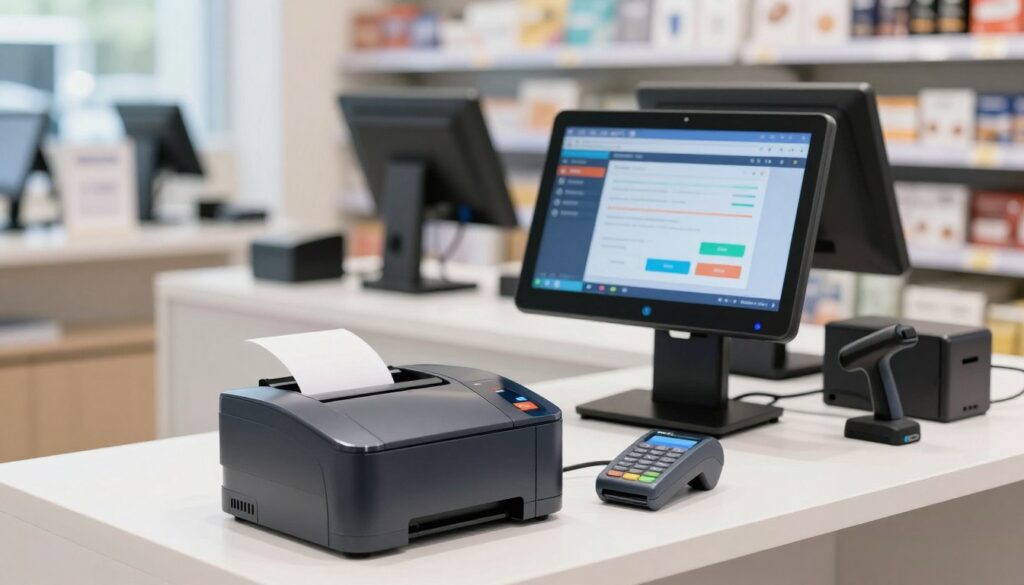
Building a reliable retail setup requires more than just software; it demands the right physical tools. Your hardware acts as the foundation for every transaction, ensuring that your business runs without unnecessary interruptions. Choosing equipment that matches your specific operational needs is a smart investment for long-term success.
Choosing the Right Receipt Printers and Barcode Scanners
When selecting receipt printers, durability should be your top priority. High-traffic environments like a busy restaurant management hub require thermal printers that can handle hundreds of prints daily without jamming. Look for models that offer fast print speeds and easy paper loading to keep your service moving quickly.
Barcode scanners are equally vital for maintaining inventory accuracy. Whether you are managing a small boutique or a large warehouse, your scanner must be responsive and ergonomic. Consider these essential features when shopping for your hardware:
- Wireless connectivity to allow for flexible movement around the store.
- Rugged design to withstand accidental drops and spills.
- Compatibility with your existing software ecosystem.
Tablet-Based POS Systems versus Traditional Desktop Terminals
The debate between mobile tablets and traditional desktop terminals often comes down to your available space and mobility needs. A grocery store POS setup often benefits from the stability of a traditional desktop terminal, which provides a fixed point for heavy-duty scanning and cash handling. These systems are robust and designed for high-volume environments where reliability is non-negotiable.
Conversely, tablet-based systems offer incredible flexibility for businesses that need to save space or serve customers on the go. They are perfect for pop-up shops or tableside ordering in dining establishments. Before making your final decision, consider the following comparison:
| Feature | Tablet System | Desktop Terminal |
| Mobility | High | Low |
| Footprint | Small | Large |
| Durability | Moderate | High |
Ultimately, the best hardware choice depends on your unique workflow. By balancing your budget with the need for reliable performance, you can create a seamless experience for both your staff and your customers.
Overcoming Challenges in POS Adoption
While upgrading your retail technology offers many benefits, it also introduces specific hurdles that require careful planning. Embracing business automation is a significant step forward, but the transition period demands patience and clear communication. By anticipating these common roadblocks, you can ensure your team remains productive and confident throughout the change.
Training Staff on New Digital Interfaces
The success of any new system depends heavily on how well your employees can navigate the interface. It is helpful to provide hands-on workshops where staff can practice using the software before it goes live. Encouraging your team to ask questions during these sessions builds confidence and reduces anxiety about the new technology.
Make sure to provide clear, printed guides near your receipt printers and terminals for quick reference. When staff members feel supported, they are much more likely to embrace the new workflow. Remember that consistent practice is the key to mastering any digital tool.
“The only way to do great work is to love what you do, and that includes the tools you use to serve your customers.”
Ensuring Data Security and Backup Protocols
Protecting your business information is just as important as streamlining your sales process. Robust data security measures are essential to keep sensitive customer details and financial records safe from unauthorized access. Always ensure that your software provider offers end-to-end encryption for all transactions.
Regularly scheduled backups are a critical part of your maintenance routine. You should automate these backups to occur daily, ensuring that no sales data is lost in the event of a hardware failure or power outage. Taking these proactive steps early on will provide peace of mind and protect your business reputation.
Cost Analysis and Return on Investment
Choosing the right payment structure for your POS software can significantly impact your bottom line. Business owners must evaluate their cash flow and long-term goals before committing to a specific financial model. Making an informed decision ensures that your technology investment supports growth without creating unnecessary financial strain.
Subscription Models versus One-Time Licensing Fees
Most modern providers offer subscription-based models, which function as a recurring monthly or annual expense. This approach is often budget-friendly for small businesses because it requires a lower initial capital outlay. You gain access to regular updates and cloud support as part of your ongoing service agreement.
Alternatively, some legacy systems utilize a one-time licensing fee. While this requires a larger upfront payment, it eliminates recurring monthly costs for the software license itself. However, you must account for potential extra charges related to maintenance, security patches, and version upgrades over time.
Calculating Long-Term Savings through Efficiency Gains
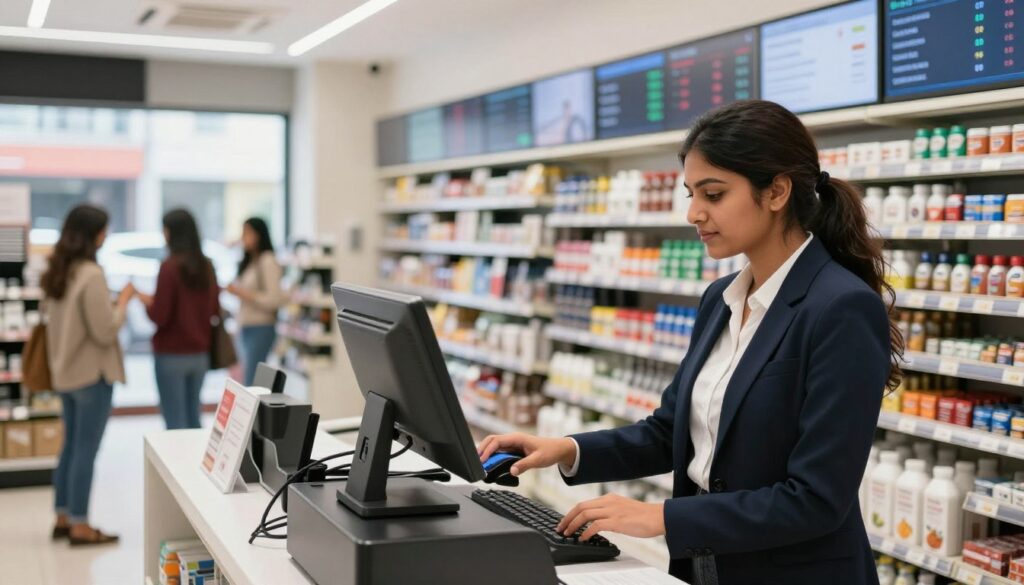
To determine your true return on investment, you should look beyond the sticker price. Retail efficiency is the primary driver of long-term savings, as automated systems reduce the time spent on manual tasks. When your staff spends less time on paperwork, they can focus more on customer service and increasing revenue.
Effective sales tracking allows you to identify high-performing products and eliminate dead stock. By leveraging these insights, you can optimize your inventory levels and reduce carrying costs significantly. Furthermore, staying ahead of local compliance requirements prevents costly fines and legal complications that often arise from outdated manual record-keeping.
Ultimately, the best system pays for itself by streamlining your daily operations. By prioritizing retail efficiency and accurate sales tracking, you transform your POS from a simple expense into a powerful tool for profitability. Investing in the right technology today builds a stronger, more resilient business for the future.
Future Trends in Nepalese Retail Technology
The retail landscape in Nepal is undergoing a massive digital transformation that promises to reshape how businesses operate. As local entrepreneurs seek to modernize, they are increasingly turning to advanced tools to maintain a competitive edge. This shift toward retail technology is creating new opportunities for growth and efficiency across the country.
The Rise of Cloud-Based POS Solutions
One of the most significant shifts is the adoption of cloud-based POS systems. These platforms allow business owners to manage their operations from anywhere, providing real-time access to sales data and inventory levels. By moving away from local servers, retailers can ensure better data security and minimize the risk of hardware failure.
Cloud systems also offer the flexibility needed to scale operations as a business grows. Whether you manage a single shop or multiple locations, these solutions provide a unified view of your performance. This level of connectivity is essential for modernizing the customer experience in a fast-paced market.
Why Businesses in Nepal Need a POS System
Many Nepali businesses still rely on manual billing or spreadsheets.
This often leads to:
- Billing mistakes
- Inventory shortages
- Lost sales records
- Incorrect VAT calculations
- Time-consuming reporting
- Cash leakage
- Difficult stock management
A modern POS system eliminates these problems by automating everyday operations.
Key Features of Modern POS software in Nepal
Fast Billing
Generate invoices in seconds with barcode scanning and quick product search.
Benefits include:
- Faster checkout
- Reduced waiting time
- Better customer experience
Barcode Support
Simply scan products to create bills.
Supports:
- Barcode labels
- Barcode printers
- Barcode scanners
Inventory Management
Every sale automatically updates stock levels.
Features include:
- Real-time stock tracking
- Low stock alerts
- Batch management
- Product variants
- Warehouse transfers
VAT Billing
Businesses registered for VAT need compliant invoices.
A good POS system should support:
- VAT invoices
- Tax calculations
- Discount handling
- Credit sales
- Returns
- Tax reports
Multiple Payment Methods
Accept payments through:
- Cash
- Bank
- QR Payment
- Mobile Wallets
- Card
- Credit Sales
Customer Management
Store customer information including:
- Name
- Phone number
- Purchase history
- Loyalty points
- Outstanding balances
Employee Management
Track staff activities including:
- Cashier login
- Sales performance
- Shift management
- User permissions
Reporting Dashboard
Business owners can instantly view:
- Daily Sales
- Monthly Sales
- Profit
- Expenses
- Top Products
- Slow Moving Items
- Inventory Value
- VAT Reports
Types of Businesses That Need POS Software
A POS system is suitable for almost every business.
Examples include:
- Grocery Stores
- Supermarkets
- Clothing Shops
- Electronics Stores
- Furniture Shops
- Medical Stores
- Pharmacies
- Restaurants
- Cafes
- Fast Food Shops
- Cosmetic Stores
- Mobile Shops
- Hardware Stores
- Wholesale Businesses
- Department Stores
- Book Stores
- Gift Shops
- Jewellery Stores
- Agricultural Supply Stores
This eliminates duplicate data entry and provides a single source of truth for your business.
Why Choose Udyot ERP POS?
Udyot ERP combines a powerful POS with a complete business management solution.
With Udyot ERP, you can manage:
- Sales
- Inventory
- Accounting
- Purchasing
- CRM
- HR & Payroll
- VAT
- Financial Reports
- Multi-branch Operations
Key Advantages
- Cloud-based access
- Fast and simple billing
- Real-time inventory updates
- Automatic accounting entries
- VAT-ready invoicing
- Role-based security
- Detailed business reports
- Multi-user support
- Multi-branch management
- Secure cloud backup
- Easy-to-use interface
- Scalable for growing businesses
Industries Using Udyot ERP POS
Udyot ERP serves businesses across various industries, including:
- Retail
- Wholesale
- Distribution
- Pharmacy
- Grocery
- Fashion
- Electronics
- Restaurants
- Manufacturing
- Trading Companies
Conclusion
Modernizing your business operations creates a path toward lasting success in a competitive market. Choosing the right tools allows you to focus on what matters most: serving your customers and growing your brand.
The journey toward digital transformation requires a commitment to learning and adaptation. Small shifts in how you manage sales and inventory lead to significant improvements in your daily workflow.
Local businesses in Nepal now have access to powerful technology that simplifies complex tasks. Integrating these systems helps you stay ahead of industry shifts while building a resilient foundation for your company.
Take the first step today by evaluating your current setup and identifying areas for improvement. Your dedication to digital transformation will pay off through increased efficiency and better insights into your business performance.
Reach out to local providers to explore options that fit your specific needs. Start your upgrade now to ensure your business remains a leader in the local retail landscape.